Where To Buy Counterfeit Money Online
Add a review FollowOverview
-
Founded Date novembre 18, 1922
-
Sectors Technicien de Maintenance et de Travaux en Système de Sécurité Incendie
-
Posted Jobs 0
-
Viewed 16

Company Description
The 10 Most Scariest Things About Buy High Quality Counterfeit Money
The Controversial World of Counterfeit Money: Understanding High-Quality Replicas
Counterfeit money has long been a subject of intrigue, secret, and legality. With improvements in technology, the production of premium High Grade Counterfeit Money notes has ended up being extremely advanced, raising concerns about the implications for services, governments, and people. This blog site post dives into the subtleties of purchasing premium counterfeit money, discussing the dangers, inspirations, and legality, while offering a useful introduction for those thinking about this questionable topic.
The Evolution of Counterfeit Money
Historically, counterfeit money has actually existed as long as currency itself. As societies transitioned from bartering systems to the use of coins and paper money, counterfeiting ended up being an attractive option for fraudsters seeking to make use of the economy.
Table 1: Historical Timeline of Counterfeit Money
| Year | Event/Development |
|---|---|
| 1050 ADVERTISEMENT | First tape-recorded instance of counterfeit coins in China |
| 1861 ADVERTISEMENT | First U.S. paper currency issued, causing increased counterfeiting |
| 1920s | The introduction of contemporary printing techniques, making counterfeiting simpler |
| 1990s | The development of digital counterfeiting with innovative software application |
| 2020s | Top quality counterfeit notes emerge, challenging detection approaches |
The Risks and Realities of Counterfeit Money
Comprehending the inspirations behind Purchasing Counterfeit Money Online counterfeit money is necessary to grasp the threats included. While some might argue that High Grade Counterfeit Money Quality Counterfeit Money (bowles-santos.technetbloggers.de)-quality replicas can be used harmlessly (such as for movie props or instructional functions), the reality is far more complicated.
List 1: Reasons Why Some Individuals Buy Counterfeit Money
- Educational Use: For those studying financing or criminal offense avoidance.
- Creative Projects: Filmmakers and artists requiring props.
- Novelty: Collectors who value the art of currency style.
- Financial Gain: Unscrupulous individuals looking to defraud others.
Table 2: The Consequences of Using Counterfeit Money
| Effect | Description |
|---|---|
| Legal Repercussions | Heavy fines and jail time for circulation |
| Financial Loss | Victims of fraud may lose real money and trust |
| Economic Impact | Counterfeiting weakens the economy and currency worth |
| Increased Law Enforcement Focus | Leads to more resources spent on discovering counterfeits |
The Legal Landscape
Before considering the purchase of counterfeit money– despite its designated usage– it is important to understand the legal implications. In many countries, it is illegal to create, distribute, or possess counterfeit currency.
List 2: Legal Aspects of Counterfeit Money
- Counterfeiting is a Federal Crime: In the U.S., it falls under Title 18 of the U.S. Code.
- Extreme Penalties: Possible jail time ranges from a number of years to decades, depending upon the volume and intent.
- Forfeit of Assets: Involvement in counterfeiting can cause the loss of personal home utilized in the criminal activity.
Table 3: Legal Consequences by Country
| Country | Nature of Penalty | Optimum Jail Time |
|---|---|---|
| United States | Federal offense | Up to 20 years |
| United Kingdom | Fraud Act offense | As much as 10 years |
| Canada | Bad guy Code offense | Approximately 14 years |
| Australia | Currency Act violation | Up to 12 years |
Recognizing High-Quality Counterfeit Money
Advancements in printing innovation indicate that counterfeit notes can closely resemble real currency. As a result, it is essential for individuals and companies to be able to identify premium counterfeits.
List 3: Key Features to Identify Authentic Currency
- Watermarks: Genuine notes typically have watermarks that are visible when held up to light.
- Microprinting: Fine print that appears in specific areas is difficult to recreate properly.
- Color-Shifting Ink: Some currencies use ink that alters color at various angles.
- Tactile Features: Many currencies have actually raised printing that can be felt when touched.
Table 4: Comparison of Features Between Real and Counterfeit Notes
| Feature | Real Currency | Counterfeit Money |
|---|---|---|
| Watermarks | Plainly visible | Inadequately reproduced |
| Microprinting | Legible under zoom | Blurred or missing |
| Color-Shifting Ink | Shifts colors at angles | Static color |
| Tactile Features | Substantial texture | Flat and smooth |
The Conclusion
While the allure of top quality counterfeit money may be appealing for some, especially for those with destructive intent, the threats and legal ramifications far surpass any viewed advantages. People and companies alike need to remain watchful versus both counterfeiters and fraudulent activities in a world where financial trust is paramount.
Regularly Asked Questions (FAQ)
Q1: Is it legal to own counterfeit money?
A1: No, owning counterfeit money is prohibited. Laws vary by country, but possession is typically dealt with as a severe offense.
Q2: What should I do if I get counterfeit money?
A2: Report it to your regional police or financial organization immediately.
Q3: Are there any legitimate usages for counterfeit money?
A3: Counterfeit money might be utilized for academic or artistic purposes, but even then, strict regulations should be followed to avoid legal concerns.

Q4: How can businesses safeguard themselves from counterfeit notes?
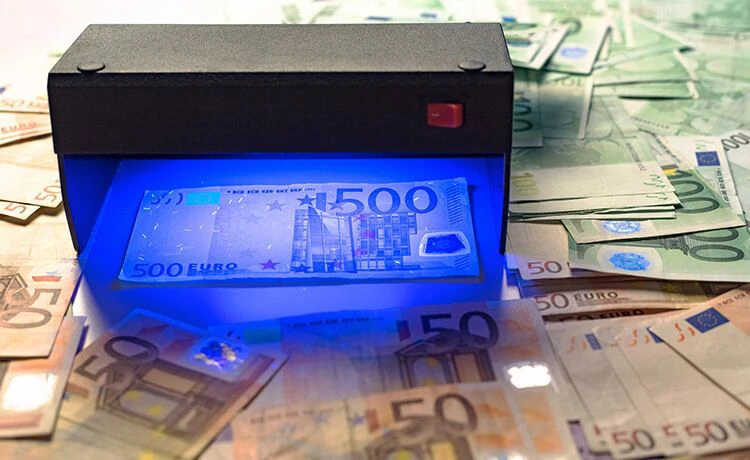
A4: Businesses can purchase counterfeit detection tools, train workers to acknowledge Authentic Fake Money For Sale currency, and implement stringent cash handling procedures.
In conclusion, the world of counterfeit money is a fascinating yet treacherous domain. As technology continues to evolve, so do the difficulties of acknowledging and combating counterfeiting. Awareness, prevention, and compliance with legal requirements are necessary for individuals and services alike.