

Führerschein Kaufen Online
Add a review FollowOverview
-
Founded Date février 8, 1999
-
Sectors Commercial en sécurité
-
Posted Jobs 0
-
Viewed 14

Company Description
German Driving License Requirements Explained In Fewer Than 140 Characters
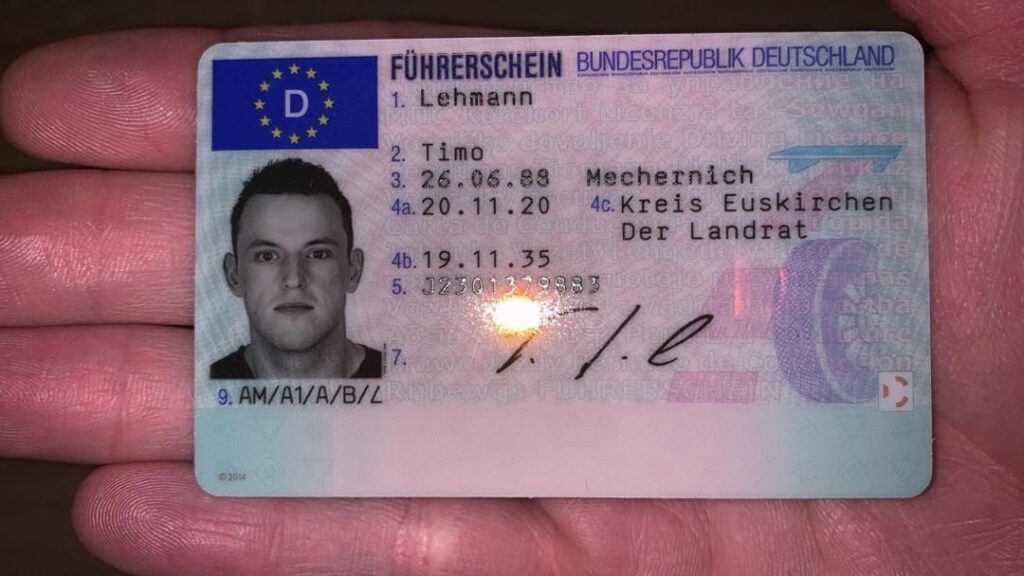
Understanding German Driving License Requirements
Germany is known for Deutscher FüHrerschein-Shop (Https://Pads.Jeito.Nl/S/MNrd9RyI0W) its well-structured transport system and Rechtliche Fragen zum deutschen Führerschein) its emphasis on road security. For those aiming to acquire a German driving license, it is necessary to understand the different requirements and procedures involved. This post will take a thorough take a look at the various kinds of driving licenses readily available in Germany, the application procedure, required files, and some frequently asked concerns to assist guide future chauffeurs.
Types of Driving Licenses in Germany
Germany provides several types of driving licenses, categorized based on the type of lorry one is allowed to run. Below is a table summing up the primary classifications:
| License Category | Age Requirement | Vehicle Type |
|---|---|---|
| Class A | 24 or 21 (with A2 for 2 years) | Motorcycles (over 50cc) |
| Class B | 18 | Cars and trucks (as much as 3.5 tonnes, max 8 guests) |
| Class BE | 18 | Vehicles with a trailer (over 750 kg) |
| Class C | 21 | Trucks (over 3.5 tonnes) |
| Class CE | 21 | Trucks with a trailer (over 750 kg) |
| Class D | 24 | Buses (over 8 passengers) |
| Class T | 16 | Agricultural cars |
Steps to Obtain a German Driving License
To get a driving license in Germany, candidates need to follow a specific treatment. Here are the actions involved:
Step 1: Determine Eligibility
- Age Requirement: Ensure you fulfill the minimum age requirement for the preferred license category.
- Residency Status: You need to have a valid residency authorization in Germany. If you are a traveler, you can not get a German driving license.
Step 2: Gather Required Documents
Applicants will need to prepare various documents. The following table notes the essential files needed for the application:
| Document | Description |
|---|---|
| Identity Proof | Passport or ID card |
| Residency Permit | Valid home authorization (if appropriate) |
| Health Certificate | Verification of physical and mental physical fitness (from a physician) |
| First Aid Certificate | Proof of conclusion of an emergency treatment course |
| Eye Test Certificate | Confirmation of satisfying vision from an eye doctor |
| Application | Submitted application type obtained from the licensing authority |
| Biometric Photos | Generally two passport-sized photos |
Action 3: Enroll in Driving School
While it is possible to take the theoretical and practical examinations without participating in a driving school, it is highly suggested to enroll in one. Driving schools use structured learning and access to the needed resources for passing the tests.
Step 4: Pass the Theoretical Exam
After completing the needed lessons, applicants need to get ready for the theoretical examination. This consists of:
- Study Theory: Study the guidelines of the road, traffic indications, and driving techniques. Many driving schools provide materials for this.
- Take the Exam: The test normally consists of multiple-choice concerns. Candidates need to attain a score of at least 80% to pass.
Step 5: Pass the Practical Exam
As soon as the theoretical test is passed, prospects can arrange the practical driving test. Secret points include:
- Driving Lessons: Complete a specific number of driving lessons, including night and highway driving.
- Test Day: Demonstrate driving abilities and understanding of roadway rules throughout the test.
Step 6: Obtain the License
Upon passing both tests, applicants can obtain their driving license at the regional licensing authority (Führerscheinstelle). The cost generally varies from EUR40 to EUR100, depending upon the area and the type of license.
Essential Considerations
- License Validity: German driving licenses are normally legitimate for 15 years, after which they must be restored.
- International Driving Permits: Visitors with a legitimate driving license from another nation might drive in Germany for up to 6 months. After that, they might need to transform their license to a German one.
Frequently Asked Questions (FAQ)
Q1: Can I drive with my foreign driving license in Germany?
A: Yes, you can drive with a valid foreign driving license for as much as six months. After this duration, you will require to get a German driving license.
Q2: Is it obligatory to take a driving course to obtain a license?
A: While not mandatory, taking driving lessons from an acknowledged school is highly recommended to guarantee you pass the tests effectively.
Q3: How long does it take to get a driving license in Germany?
A: The time frame differs, but candidates can expect the procedure to take numerous weeks to a couple of months, depending on availability of driving lessons, examination dates, and specific readiness.
Q4: Can I request a driving license if I have a criminal record?
A: Applicants with a criminal record may face constraints on obtaining a driving license, particularly if the crimes include driving offenses. Each case is evaluated individually.
Q5: Do I require to know German to take the tests?
A: The theoretical exam is readily available in numerous languages, however useful exams are conducted in German. It is suggested to have a basic understanding of the language for effective interaction.
Getting a German driving license involves a clear understanding of the requirements, a dedication to knowing, and cautious preparation for tests. By following the steps outlined above and Deutscher Führerschein Online (https://hackmd.okfn.de) making sure all essential documents are in order, aiming motorists can navigate the licensing procedure effectively. Whether you are a resident or a foreigner, Rechtliche Fragen zum deutschen führerschein (oakmontforum.com) driving in Germany opens a world of possibilities, making it all the more worthwhile to pursue the journey towards getting this essential credential.
